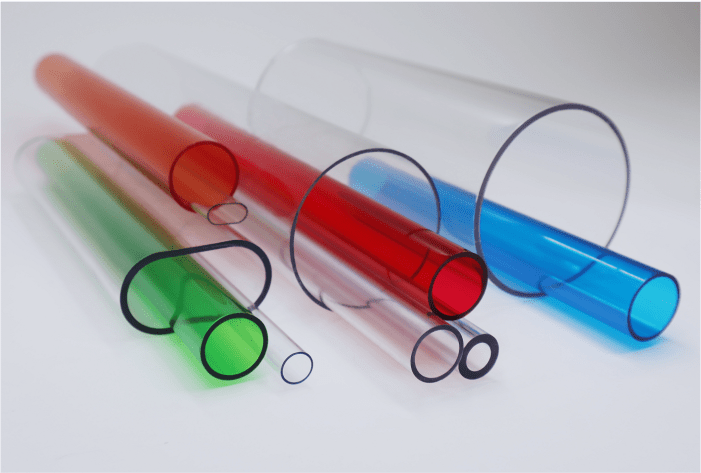
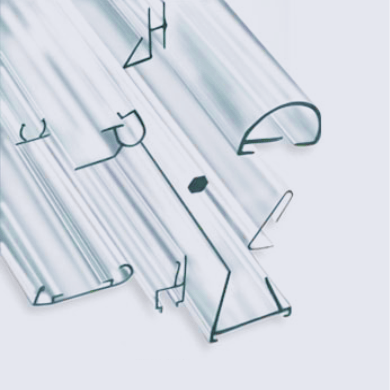
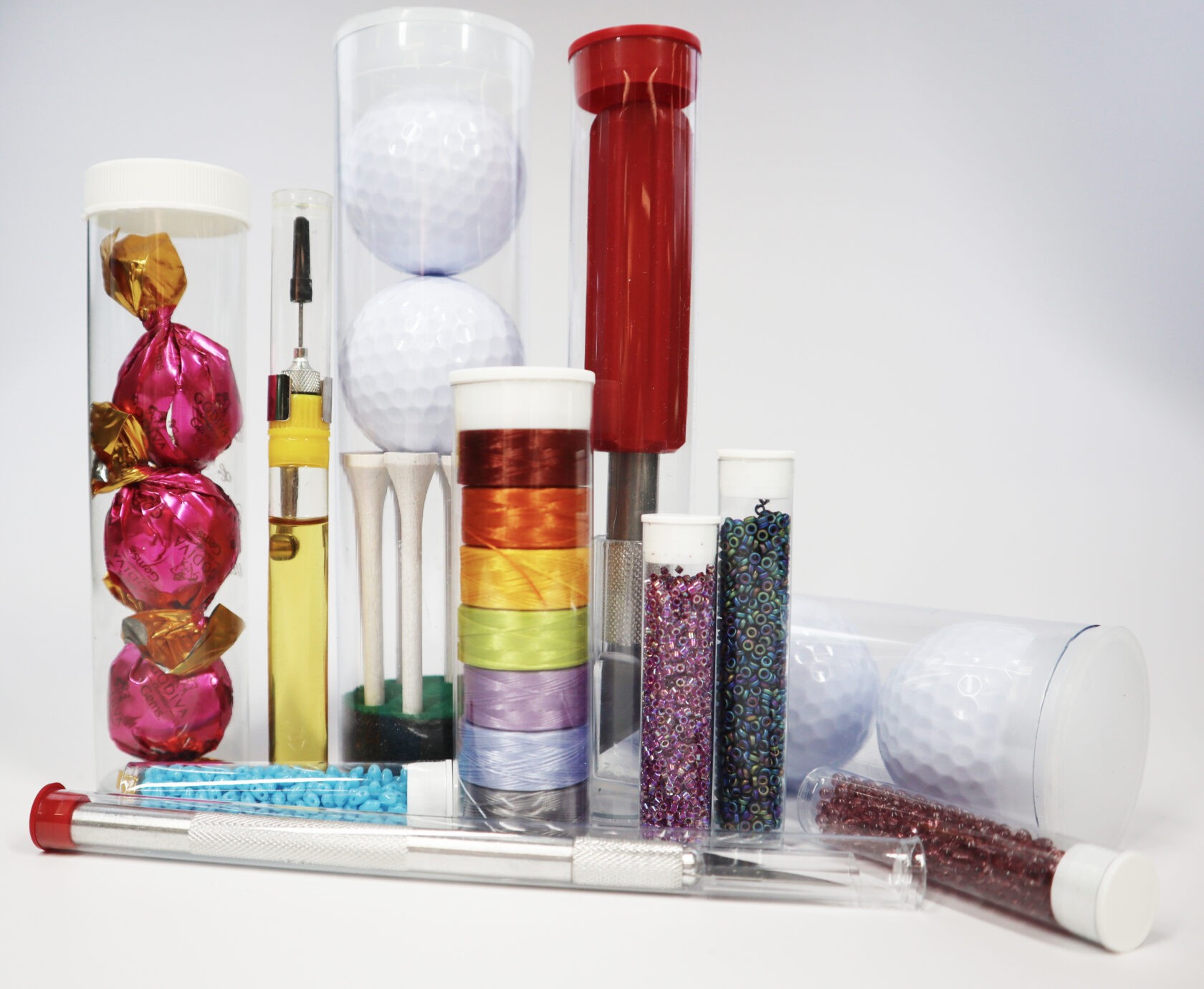
Custom extruded thermoplastics are some of the best products to use when the application calls for tight dimensions, thorough and consistent cross-sections, and cost-effectiveness. And when materials are matched to part application rather than just shape, it enhances and improves performance, ability to withstand the intended environment, and part longevity improves as well.
Petro Packaging Co. Inc. highlights the importance of matching materials to performance requirements for custom extruded thermoplastics and why customers should work closely with their manufacturer to understand how parts and extrusion programs improve because of material matching.
Why Matching Materials Matters
On its face, extrusion is the perfect manufacturing process for creating continuous profiles that feature dimensional stability, tight cross-sections, and minimal fluctuations in the design. Even with this, the shape has to not only withstand the extrusion process, but the elements in its future environment. This means making considerations on numerous factors such as heat, UV, chemicals, impact, potential flexing, and dimensional constraints the product may face during usage.
When these aspects are the main points in the material selection process for custom extruded thermoplastics, the success rate of a program vastly increases.
Property Tradeoffs to Consider for Custom Extruded Thermoplastics
Every material is going to face different tradeoffs where certain aspects are going to be more resistant to other elements, but when resistance is strong in one aspect, it might be weak in another. Consider these tradeoff examples.
If a thermoplastic offers strong flexibility, it might not be the best choice for a heat resistant material. Whereas, if a resin offers strong heat resistance, it is likely going to be a more stiff product.
Chemical resistance and overall material toughness have a delicate relationship with one another. While there are resins that can handle oils, solvents, cleaners, and other chemicals with relative ease, it may not be the ideal choice for impact strength or optical clarity.
Another major tradeoff is cost itself versus performance. Engineered and high-performance plastics come at a higher cost, but are best used when the part application requires more durability or stability. Whereas with common thermoplastics, they are easier to manufacture, process, and ultimately source – even though it may not perform as well compared to an engineered thermoplastic.
Partner with Petro Packaging Co. Inc. for Expert Solutions in Custom Extruded Thermoplastics Operations
Petro Packaging Co. Inc. has provided stock and custom extruded thermoplastics operations for over six decades in our Cranford, New Jersey facility. We’ve pioneered the usage of three specific thermoplastic sources in the extrusion industry – CAB, CAP, and PETG – but our capabilities extend beyond those three choices.
Our experienced and knowledgeable engineers work with your team to understand the needs and demands of your extrusion program and what’s required of the product before, during, and after manufacturing. With design support readily available, matching materials to performance requirements isn’t just achievable, it’s the standard.
Jumpstart your custom extruded thermoplastics operation today and contact the team at Petro Packaging Co. Inc.