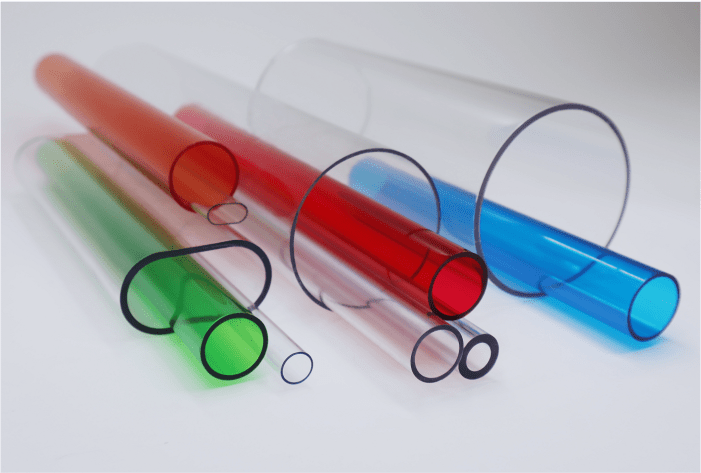
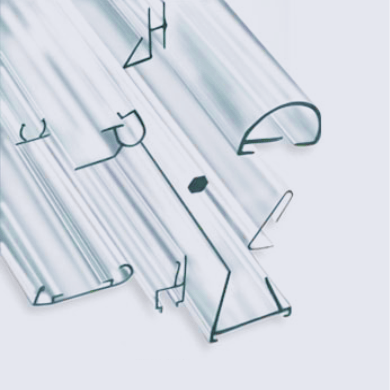
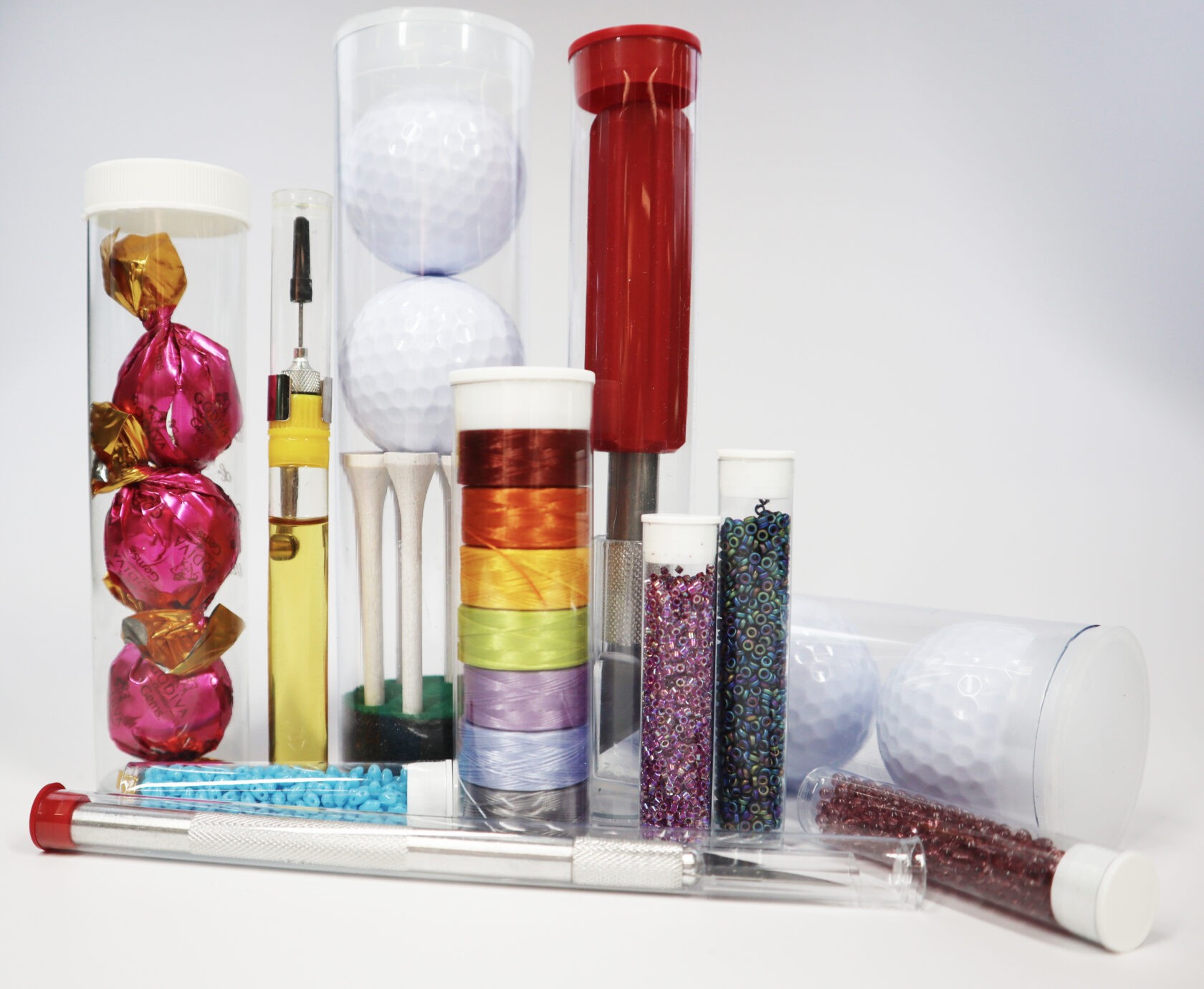
A plastic extruder machine forms melted plastic into a continuous profile. For plastic packaging and tubes, the profile is generally cylindrical, but the high-volume manufacturing process can produce complex shapes with various cross-sections and sizes, such as retail shelving ticket channels, custom joinery, or living hinges. Choosing a partner with engineering and design support, material knowledge, secondary operations, and expertise across industries allows ensures your product fits your application requirements and performs as intended.
Understanding the Plastic Extruder Machine
Before covering partner capabilities, we will look at plastic extruder machine capabilities. Understanding the process empowers customers to choose a plastic extrusion company with the equipment capabilities to deliver products that meet their needs.
For buyers, the plastic extruder machine directly affects what you receive. Line capability and condition influence how consistently a supplier can hold dimensions, maintain surface finish, run specific materials, and hit throughput targets without frequent stops or scrap. So, understanding the machine helps you ask better questions and select a partner that can reliably meet your quality, lead time, and cost expectations.
The extruder comprises several parts that work together to produce the profile. A feed throat directs material from a hopper toward a heated barrel, where it meets a rotating screw. The screw plays a significant role in product quality, throughput, and efficiency.
The rotating screw moves the material forward, while heaters and friction melt it into a uniform plastic. The melt passes through a breaker plate/screen pack, which filters contaminants and helps build steady pressure. The pressurized melt is pushed through a shaped die, which forms the continuous profile. The hot profile is then cooled (often with air or water) to retain its final shape, and it’s typically cut to length downstream.
Another type of plastic extruder machine is a co-extrusion machine, which allows multiple materials with different properties to be simultaneously extruded through a single die to create a single, multi-layered product with enhanced functionality or aesthetic appeal. By carefully controlling the layers, products can be created with unique characteristics, such as white profiles with clear windows or products with multiple durometers.
A common question in plastic extrusion is whether the same die can be used with different polymers. The die is a thick metal disk that is machined to produce the desired shape. In some cases, it can be used for similar materials, but dissimilar polymers may have different viscosities, which impact how the melt flows and cools, so the die may need adjustment or a new design to maintain quality. Differences in flow and cooling can affect dimensions and surface quality. Processing windows are also considered with a material change. A die-and-tooling setup optimized for a single melt temperature range may lead to instability or degradation when used with another polymer. In practice, minor material changes may be handled with process tuning, but switching polymer families (or using abrasive/corrosive compounds) frequently requires die rebalancing, material-specific tooling features, or a different die altogether.
Engineering and Design Support Is a Fundamental Capability
Customized extrusions with unique shapes, lengths, thicknesses, colors, and materials require an extrusion partner that provides comprehensive engineering and design support to ensure your parts are manufactured to exact specifications.
Engineers should collaborate with you to refine your design geometry to ensure that complex shapes are feasible within the extrusion process. This support helps prevent common issues such as warping and dimensional instability.
Material selection is another key area where an experienced extruder partner adds value. With knowledge across a range of polymers and blends, they help you choose materials that meet your functional, aesthetic, and regulatory requirements, whether you need clear plastics for visibility, specific durometers for flexibility, or specialized compounds for chemical or UV resistance. By understanding how each material behaves during extrusion, your partner can advise on the best options to achieve your desired appearance and performance.
Precise tolerances are essential for parts that must fit or function in demanding applications. Engineering support ensures that your extrusions meet tight dimensional requirements, accounting for the way materials flow, cool, and shrink during processing. However, over-constraining thermoplastic products by specifying unnecessarily strict tolerances can slow production rates and increase the likelihood of non-conforming parts, driving up costs for the customer. Through careful tooling design and process control, your extrusion partner delivers consistent parts that meet your specifications while helping you balance precision with manufacturability to avoid excessive costs.
Choosing an extruder with engineering and design capabilities streamlines development, reduces risk, and ensures your custom extrusions meet the needs of your application. Their expertise transforms your concept into a finished product that performs reliably and efficiently.
Prototype Support Reduces Risk
Prototype support bridges the gap between an early concept and a repeatable, production-ready extrusion. In plastic extrusion, the most useful prototypes are typically produced using production-intent tooling and controlled line trials, because they better reflect real melt flow, pressure, and cooling behavior. Early samples help validate fit and function and confirm the profile can be produced consistently.
Strong prototype support starts with collaboration. Your extrusion partner should align with you on the application, define critical dimensions and tolerances, and confirm material and performance requirements before running samples or small-scale test runs. It’s common for early prototypes to drive refinements, either through process tuning or targeted tooling adjustments, to improve dimensional stability, surface finish, stiffness/flexibility, and overall function.
When handled well, prototyping reduces risk before full production by confirming that the tooling approach, material choice, and process window can meet performance requirements with repeatable results.
In-House Tooling Capabilities Reduce Risk and Lead Time
Extrusion quality and repeatability are heavily influenced by tooling. The die, calibration/sizing tooling, and downstream fixtures help balance melt flow, control dimensions, and stabilize the profile as it cools. Because those components wear over time and often need fine-tuning during development, choosing a partner with in-house tooling capabilities can be a meaningful advantage.
An internal toolroom shortens the feedback loop between engineering and the production floor. When tooling adjustments are needed, whether to address flow balance, improve surface finish, or bring critical dimensions into spec, changes can be evaluated and implemented faster than if the work must be queued with an outside vendor. That responsiveness can reduce prototype cycles, help protect launch timing, and limit the cost of prolonged trial-and-error.
In-house tooling also supports long-term consistency. Tooling can be proactively monitored, maintained, and refurbished as part of day-to-day operations, helping prevent gradual drift, unexpected downtime, and quality issues that only appear after wear accumulates. For ongoing programs, that translates into more stable output and fewer disruptions.
When evaluating suppliers, ask who designs and builds the dies, who performs routine maintenance and emergency repairs, and how tooling conditions are tracked over the life of a program. Also, clarify what is handled internally versus subcontracted, typical timelines for adjustments, and how the toolroom communicates with production when quality or throughput targets change.
Secondary Operations Simplify Finishing and Assembly
Secondary operations are the finishing steps that happen after the profile exits the line, such as cutting to length, punching or drilling holes, notching, mitering, machining, slitting, and applying tape or Velcro. These steps often determine how easily a part installs and how consistently it performs in the end application.
When secondary operations are handled in-house, you can reduce handoffs, shorten lead times, and improve quality control because the same team can validate dimensions before and after finishing. It also makes it easier to manage revision changes and scale from samples to production without requalifying a new vendor for downstream work. When comparing suppliers, ask which secondary operations they perform internally and how they inspect finished parts.
Why Choose Petro Packaging?
We are an integrated custom plastic extrusion partner with the engineering resources and manufacturing support needed to take a profile from concept to repeatable production. With decades of experience producing tubes, containers, and profile extrusions, our team supports customers who need dependable product delivery, responsive communication, and guidance through development and scale-up.
A key advantage is end-to-end support during design and development. Our engineering team can help evaluate profile geometry, identify critical features, and set tolerance targets that balance fit and function with manufacturability. For new programs, prototype design support and small production test runs provide a practical way to validate form, fit, and performance before committing to full-scale production.
We maintain production tooling with skilled in-house tool and die makers, helping protect quality and uptime through proactive maintenance and faster adjustments. And for programs that need ready-to-use parts, added-value services can reduce handoffs and simplify finishing.
If you’re evaluating extrusion suppliers, these capabilities can translate into shorter development cycles, fewer production surprises, and more consistent results over the life of your program.
Contact our sales representatives to request a quote and experience firsthand how we are different.